
Choosing between traffic signs suppliers in South Africa looks straightforward until the order goes wrong. A sign arrives in the wrong retro-reflective grade. Lead times stretch without explanation. A contractor queries compliance and nobody can produce the documentation. These are not edge-case problems; they are the predictable result of selecting a supplier on price alone, without asking the questions that actually matter. This guide sets out the criteria that procurement managers and project buyers should apply before committing to any signage order, large or small.
Manufacturer or Reseller: The Distinction That Changes Everything
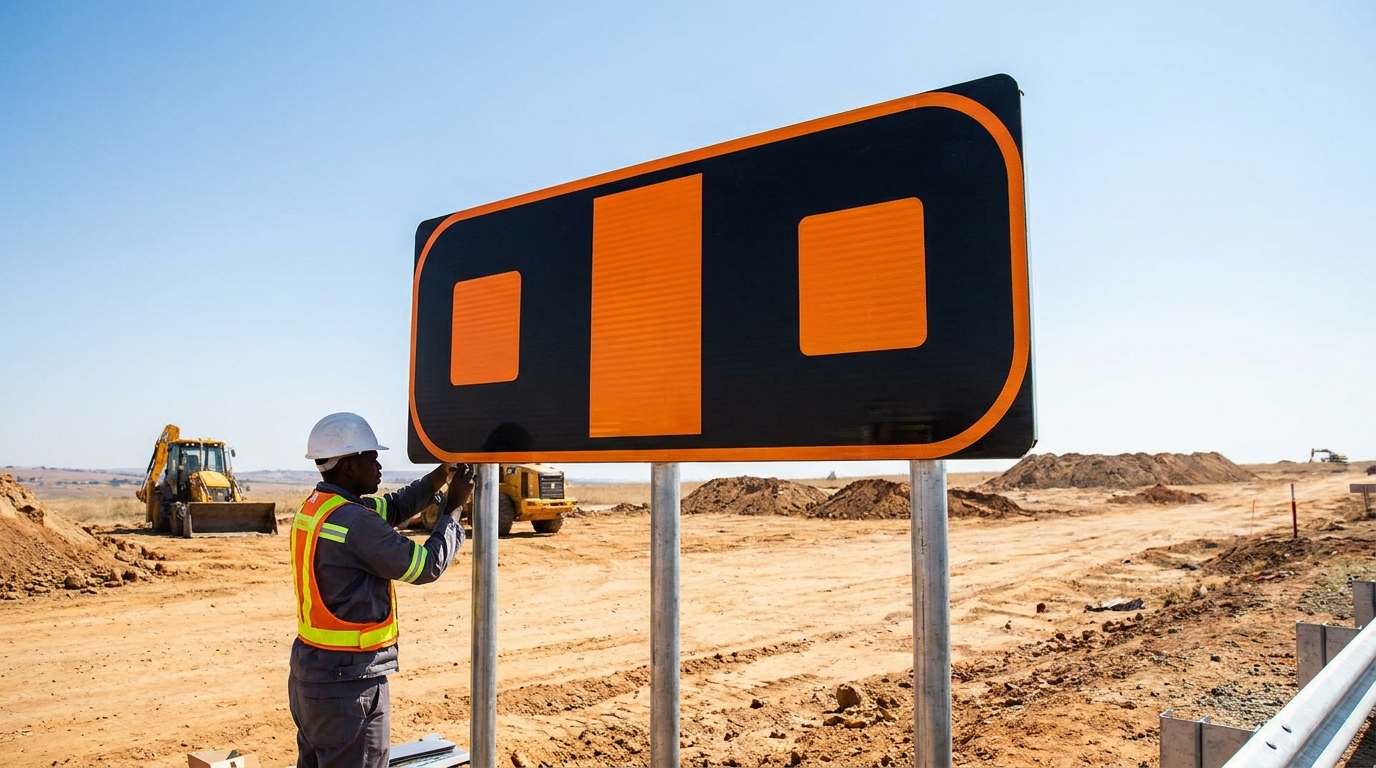
The single most important question to ask any potential supplier is whether they manufacture the signs themselves or source them from a third party. The answer determines how much control exists over quality, compliance, lead times, and problem resolution.
A reseller can offer competitive pricing on standard stock items, but they are dependent on their own supplier’s production schedule, material choices, and quality controls. When something is wrong, accountability is diluted across the chain. A manufacturer, by contrast, controls the substrate, the retro-reflective sheeting, the printing or screen process, and the finishing. They can verify compliance at every stage because they own every stage.
Signs-R-Us manufactures its road and traffic signs in-house, which means specifications are not subject to interpretation by a supplier three steps removed from the order. When a project buyer specifies a particular sheeting grade or substrate, that specification is applied directly on the production floor, not passed along in an email to a wholesaler.
SARTSMA Compliance Is Not Optional
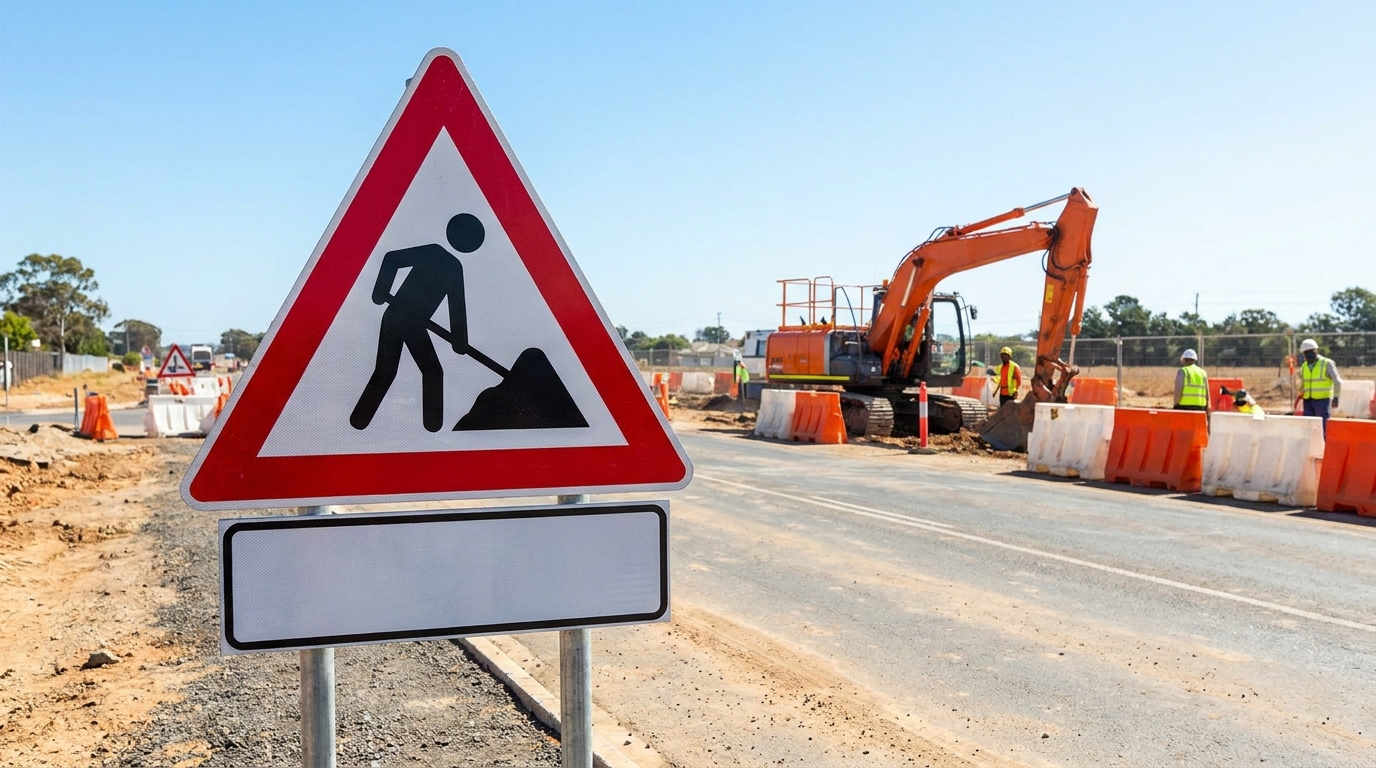
South African road and traffic signage is governed by the South African Road Traffic Signs Manual (SARTSMA), and any supplier who cannot demonstrate compliance with that standard should not be on your shortlist. SARTSMA sets out the precise specifications for sign dimensions, colours, typefaces, symbols, and retro-reflective sheeting grades. Deviations are not a minor issue. Non-compliant signs can expose a project to liability and, in some cases, require costly replacement before a road or site passes inspection.
Related to SARTSMA is the COLTO standard, which governs temporary traffic accommodation and construction zone signage. Projects that involve roadworks or construction-phase traffic management need a supplier who understands both frameworks, not just one. If you are working on a long-term infrastructure project, it is worth reading through the detail of SARTSMA vs COLTO compliance and what it means for your signage specification before finalising your order.
When evaluating a supplier, ask directly: can they produce compliance documentation for each sign type? Do they hold any relevant certifications? Can they demonstrate which retro-reflective sheeting grade is applied to each product? Vague answers at this stage are a warning sign.
Retro-Reflective Sheeting Grades
Retro-reflectivity is one of the most commonly misunderstood elements of traffic sign specification. SARTSMA specifies minimum sheeting grades for different sign types and locations. Engineer-grade, high-intensity, and diamond-grade sheeting each have specific applications, and substituting a lower grade to reduce cost is a compliance failure, not a saving. A credible supplier will be able to specify which grade is used on each sign and explain the reasoning without prompting.
Product Range Coverage Matters for Complex Projects
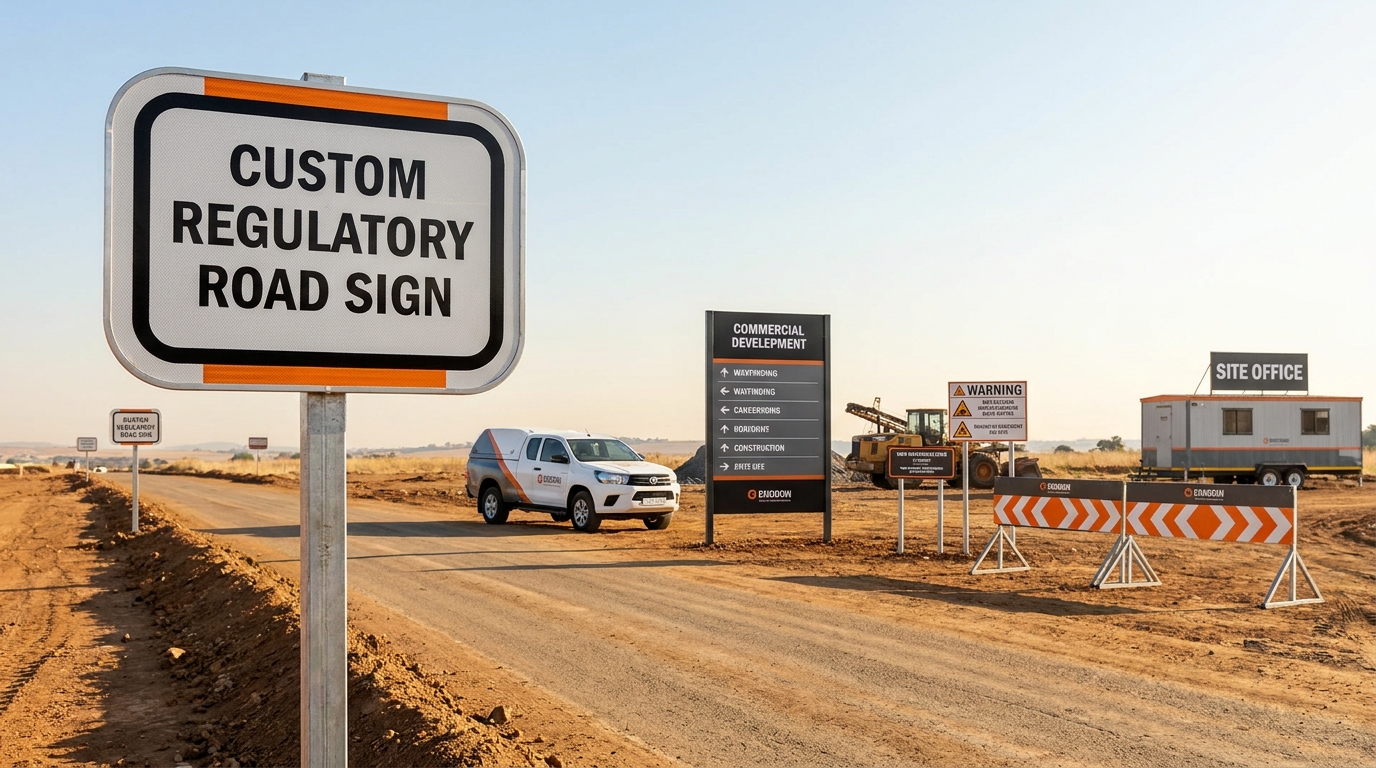
A supplier with a narrow product range creates gaps that procurement teams then have to fill elsewhere. For a construction project, a mine, or a large commercial development, the signage requirement typically spans several categories: regulatory road signs, warning signs, information and guidance signs, temporary construction signs, and site safety signs that fall under OHS requirements.
Sourcing across multiple suppliers increases administrative overhead, complicates accountability, and makes it harder to ensure visual consistency across a site. A supplier who can cover the full requirement from a single point of contact is a material operational advantage.
Signs-R-Us covers this range in full, from road signs manufactured to SARTSMA specification through to OHS signage and PPE products for site compliance. That breadth also extends to mining environments, where wayfinding, safety, and regulatory requirements intersect in ways that demand specific expertise.
Temporary and Permanent Sign Categories
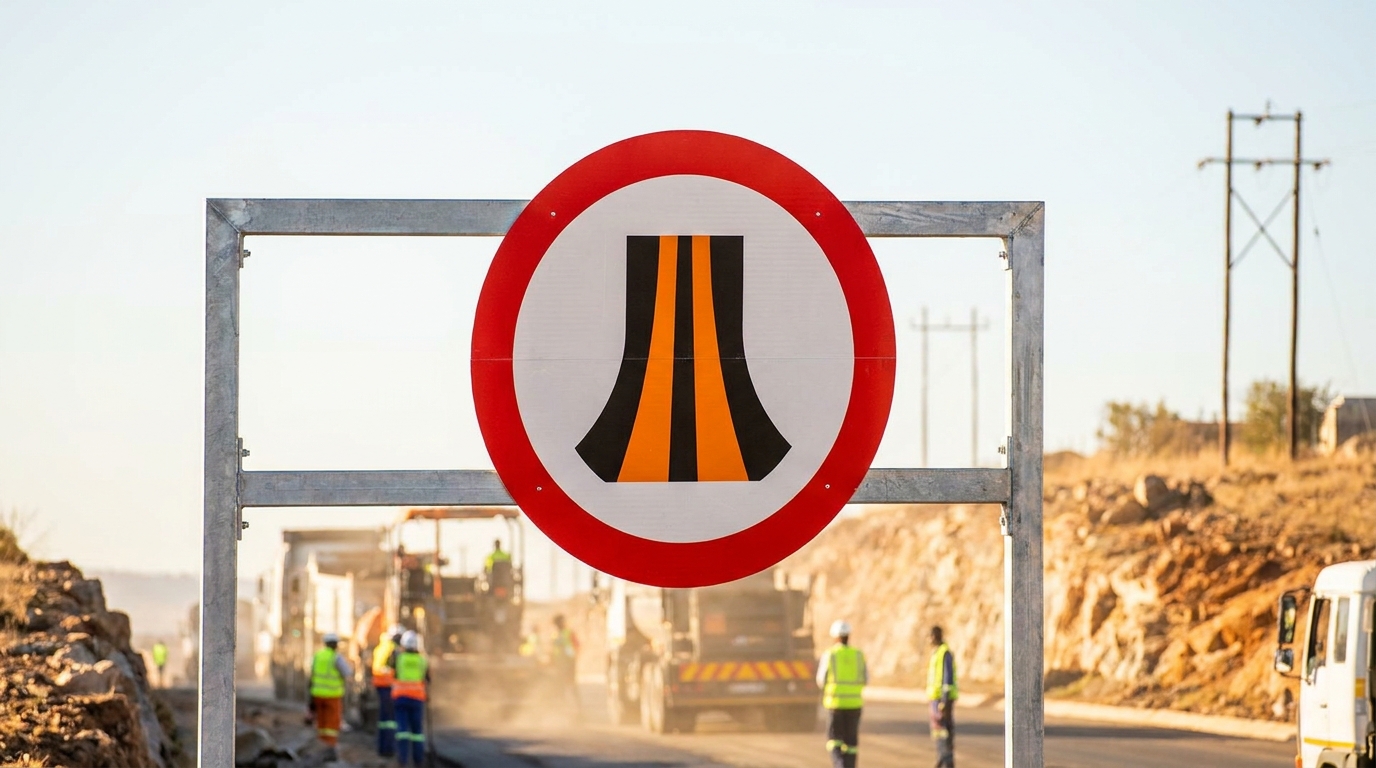
Many procurement managers think about traffic signs primarily in terms of permanent installations, but temporary signage is frequently the more urgent requirement. Road closures, construction detours, pedestrian management, and hazard warning all require signs that can be deployed quickly and recovered safely. A supplier who only handles permanent installations will leave you scrambling when a project phase demands temporary traffic accommodation at short notice.
How to Assess Lead Times Before You Commit
Lead time promises made during a sales conversation are not always the lead times experienced once an order is placed. The best way to assess a supplier’s actual delivery performance is to ask for references from comparable projects and to ask those references specifically about delivery reliability, not just product quality.
Several factors affect lead times in a meaningful way. Custom signs require artwork approval, which adds time if the supplier’s process is slow or communication is poor. Non-standard dimensions or materials may require special procurement. Large orders may need to be sequenced across production runs. A transparent supplier will explain these variables upfront and build them into a realistic schedule. A supplier who simply confirms whatever date you suggest is not being helpful.
In-house manufacturing shortens lead times on standard products and gives a manufacturer more flexibility on custom work. When production is outsourced, any of these variables can cascade into delays that the reseller cannot control or resolve.
Urgency Orders and Stock Availability
Some procurement situations do not allow for extended lead times. A site safety non-compliance notice, an emergency road closure, or a sudden change in traffic management requirements may need a sign within days. Ask any prospective supplier what their emergency or urgency order process looks like, what they hold in stock, and what the realistic minimum turnaround is. The answer tells you a great deal about the organisation behind the quote.
Certifications and Documentation
A supplier’s certifications are not merely marketing material. They are evidence that the business meets externally verified standards for quality, safety, or compliance. For traffic signs procurement in South Africa, relevant documentation might include quality management certifications, materials compliance certificates, and, where applicable, industry body memberships.
Signs-R-Us publishes its certifications on a dedicated page, which procurement managers can review without having to request documentation through a sales contact. That transparency reflects an approach to compliance that runs through the business, not just the product.
When a supplier cannot or will not provide documentation readily, that is a procurement risk. Projects subject to audit, client sign-off, or regulatory inspection need a paper trail that begins with the supplier.
Traffic Signs Suppliers in South Africa: Asking the Right Reference Questions
References from previous clients are standard practice in procurement, but the value of a reference depends entirely on the questions asked. Generic satisfaction questions yield generic answers. More useful questions include:
- Did the supplier deliver on the original lead time, or were there changes? If so, how were those communicated?
- Were compliance documents available when required, and were they accurate?
- How did the supplier handle queries or errors after delivery?
- Would you use this supplier again for a project of similar complexity?
- Did the product quality match the samples or specifications provided at quotation stage?
A supplier confident in their track record will provide references without hesitation and will not attempt to steer you toward only the most favourable contacts. Ask for references from projects similar to yours in scope and sector, whether that is road construction, mining, retail, or industrial.
Sector-Specific Experience
Traffic and road signage intersects with several distinct sectors in South Africa, each of which has its own regulatory context. Mining signage operates under the Mine Health and Safety Act as well as the requirements set by the Department of Mineral Resources and Energy. Construction site signage must align with COLTO during roadworks phases and OHS Act requirements throughout. Municipal road projects require strict SARTSMA adherence at every stage.
A supplier with genuine experience in your sector will ask the right questions at quotation stage. They will identify compliance requirements you may not have flagged, suggest appropriate materials for the operating environment, and anticipate the kinds of sign combinations a specific project type typically demands. That knowledge reduces the chance of costly corrections later.
For mining procurement specifically, the requirements around wayfinding, hazard communication, and regulatory signage are substantial. The detail behind what every South African mine needs from its wayfinding signage is worth working through if you are sourcing for an underground or surface mining operation.
What a Strong Supplier Relationship Looks Like in Practice
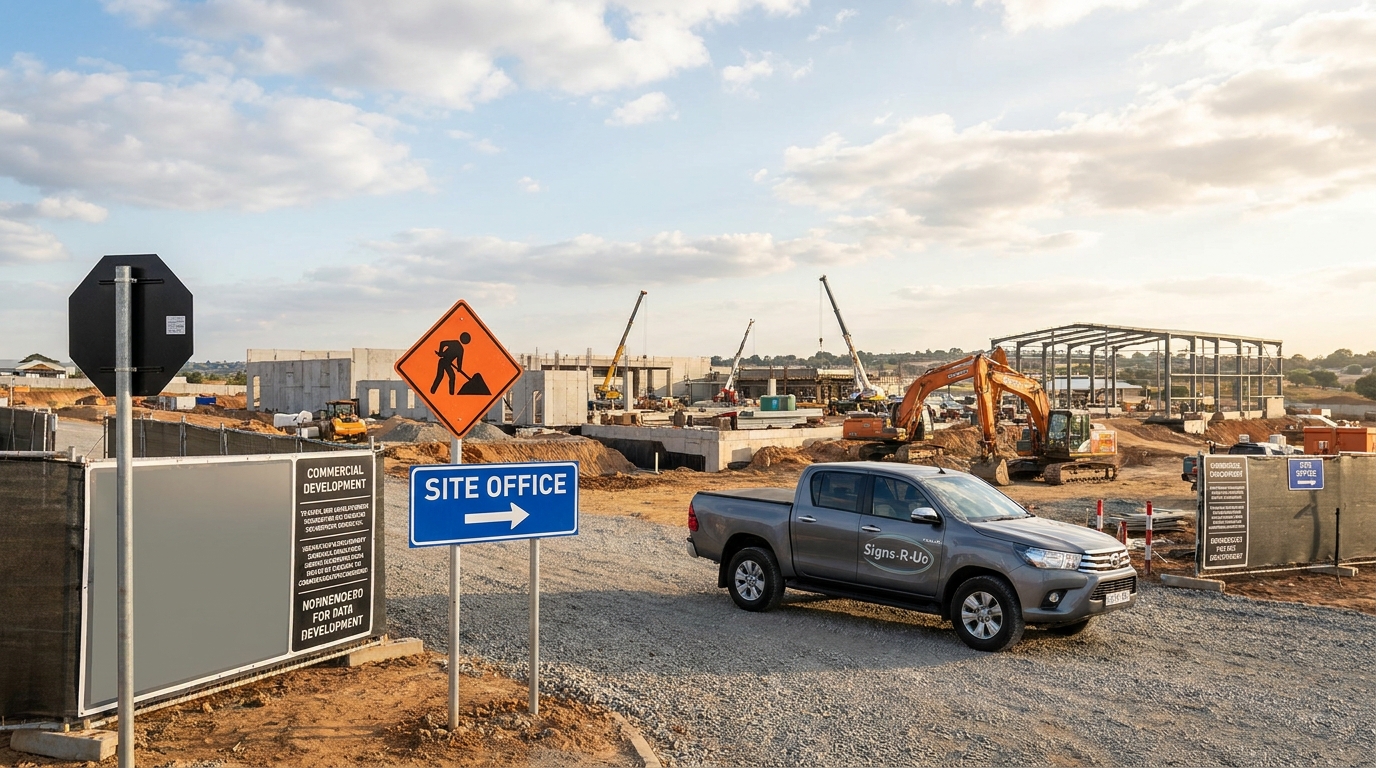
Beyond the initial order, a reliable traffic signs supplier becomes part of your project infrastructure. Signs require maintenance over time. Specifications change as projects evolve. Regulatory updates occasionally require sign replacements across a site. A supplier who builds a working relationship with procurement teams, who tracks what has been supplied and can reorder consistently to specification, is worth more than a cheaper alternative who treats each order as a standalone transaction.
Signage maintenance is a frequently overlooked procurement consideration. Faded, damaged, or missing signs create compliance exposure and, on a working road or site, a genuine safety risk. A supplier who offers ongoing maintenance support alongside supply simplifies that responsibility considerably.
Making the Right Decision for Your Project
Procurement decisions around traffic signage carry more consequence than they are sometimes given credit for. A compliant, well-specified sign in the right location, installed on time, documented correctly, is a straightforward outcome. Getting there requires a supplier with the manufacturing capability, compliance knowledge, product range, and operational reliability to deliver without gaps.
Apply these criteria consistently across any supplier you are evaluating, and the field narrows quickly. The lowest quote from a reseller with no compliance documentation and vague lead times is not a saving; it is a deferred cost.
If you are ready to discuss your project’s signage requirements with a manufacturer who covers the full range of road and traffic signs, safety signage, and site branding, request a custom quote from Signs-R-Us or visit the full services overview to see the breadth of what is available before you make your final decision.