
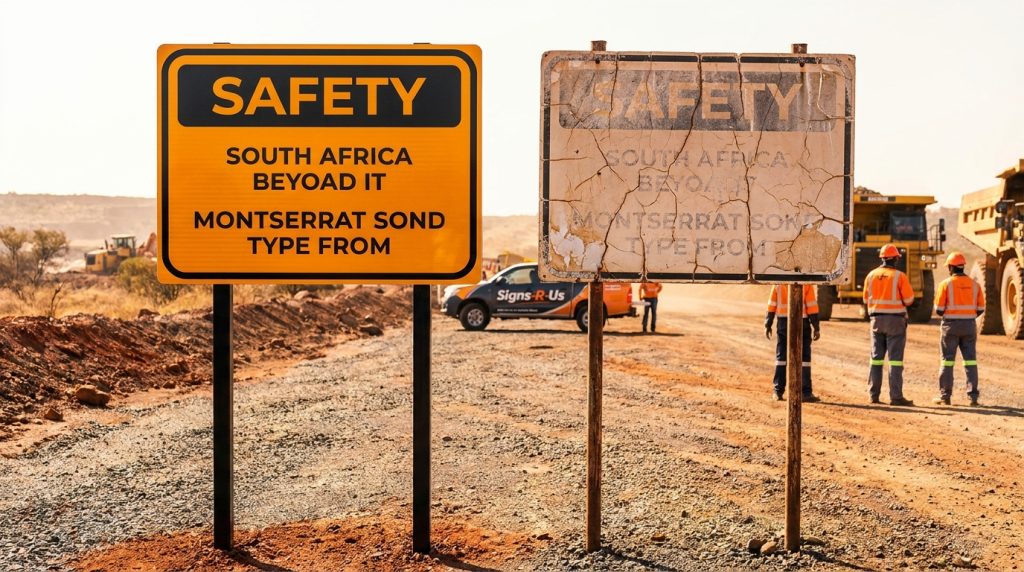
A sign that no one can read is not a sign – it is a hazard. Yet across South African industrial sites, construction projects, mines, and commercial premises, faded lettering, cracked substrates, and missing safety notices are far more common than they should be. Signage maintenance in South Africa is an area where many facilities managers and site managers cut corners, often without realising the legal and operational exposure they are carrying. This guide sets out what the law expects, how long different sign types realistically last, and what a proactive maintenance programme actually looks like in practice.
What the OHS Act Requires for Sign Condition
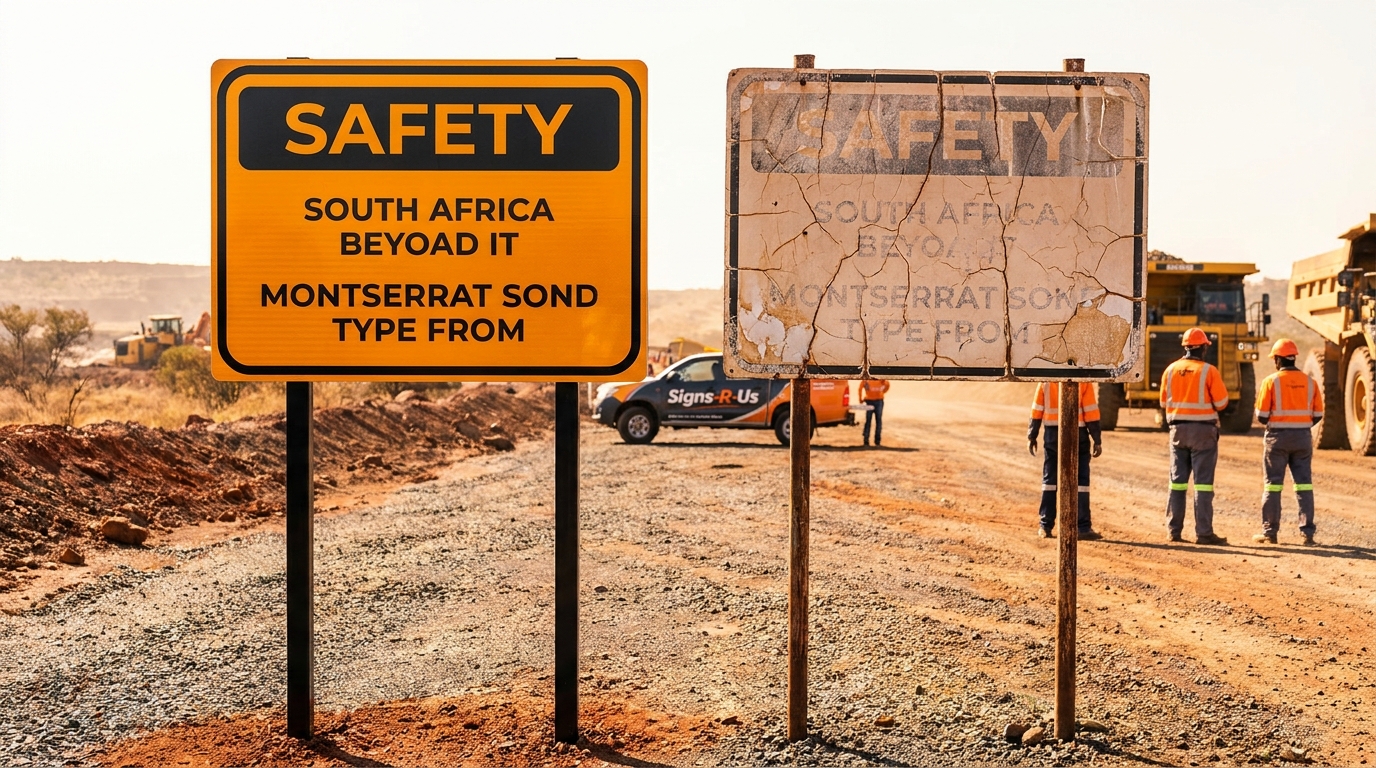
The Occupational Health and Safety Act 85 of 1993 does not simply require that signs be present. It requires that the workplace be safe, that hazards be communicated clearly, and that protective measures remain effective. A sign that has bleached to illegibility, whose retroreflective sheeting has delaminated, or whose mounting post has rusted at the base, is not fulfilling its function. Under a reasonably broad reading of employer duty of care, that is a compliance failure.
Section 8 of the OHS Act places a general duty on employers to provide and maintain, as far as reasonably practicable, a working environment that is safe and without risk to employees. Signs are part of that environment. The Act’s subordinate regulations – particularly the Construction Regulations and the General Safety Regulations – add more specific requirements around warning notices, hazard identification, and the communication of restricted areas.
The practical implication is this: if a sign is part of your site’s safety system, its condition is a compliance matter, not just a maintenance matter. Inspectors and, in the event of an incident, courts will consider whether your signage was legible, correctly positioned, and appropriate for the hazard it addressed. Keeping records of sign inspections and replacements is therefore not just good housekeeping – it is evidence of due diligence.
For a plain-English breakdown of your broader signage obligations under the Act, the article on the OHS Act and your signage obligations covers the regulatory framework in more detail.
Recommended Replacement Cycles by Sign Type
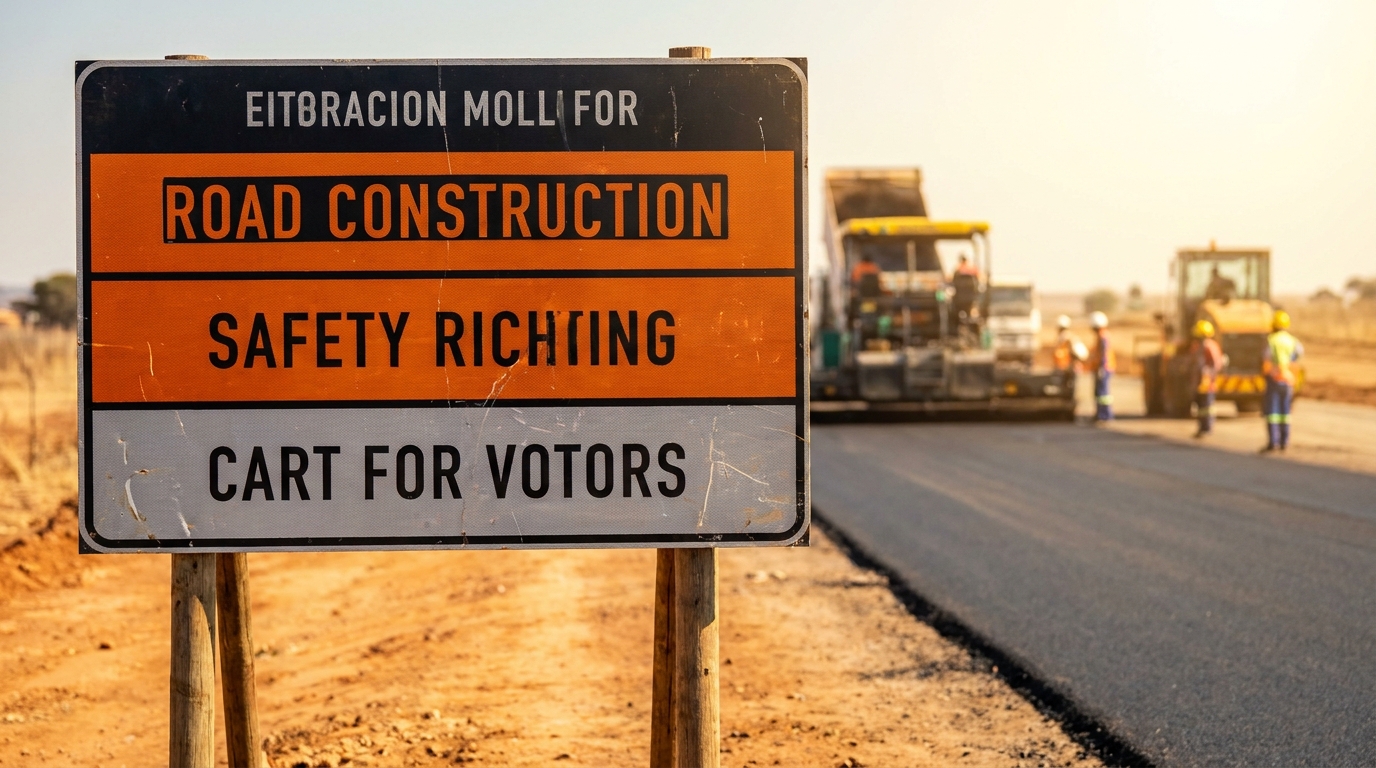
There is no single replacement interval that applies to all signage. The relevant variables are the substrate material, the printing or reflective technology used, the exposure environment, and the nature of the hazard the sign addresses. What follows are practical benchmarks based on the materials and conditions common across South African sites.
Retroreflective Road and Traffic Signs
Retroreflective sheeting is graded by performance class, and higher-grade sheeting carries a longer warranted lifespan. Standard-grade sheeting used on temporary traffic management signs typically maintains adequate retroreflectivity for three to five years under normal conditions. High-intensity and engineering-grade sheeting, used on permanent road signs, is generally specified for seven to ten years or more.
The South African climate accelerates degradation. UV exposure on the Highveld, coastal salt air, and the temperature cycling common to inland sites all shorten the practical lifespan of reflective materials. A sign installed facing west in direct afternoon sun will degrade noticeably faster than one installed in a shaded or north-facing position. Sites should factor environment into their inspection schedules, not rely solely on manufacturer specifications.
Compliance requirements for road signs – particularly around SARTSMA and COLTO specifications – add another dimension to replacement decisions. A sign that no longer meets the specified sheeting grade for its road category must be replaced regardless of age. The article on SARTSMA vs COLTO: what signage compliance means for your project is worth reading if your site sits on or adjacent to a public road.
OHS and Safety Signs
OHS signs – prohibition signs, mandatory action signs, warning signs, and emergency information signs – are subject to SANS 1186 specifications governing colour, symbol, and size. These signs should be inspected at least every six months on active sites, and replaced as soon as any of the following occur: colour shift that reduces contrast below the specified level, physical damage that obscures any part of the symbol or text, fading caused by UV or chemical exposure, or substrate deformation that causes the sign to bow or peel.
Chromadek steel substrates offer considerably better longevity than PVC or polystyrene alternatives in outdoor environments. A quality chromadek sign, correctly printed and finished, will typically outlast a plastic equivalent by several years on a harsh site. The trade-off is weight and cost, but for permanent installations the economics usually favour metal. If you are comparing substrate options, the article on why South African sites choose chromadek over plastic sets out the practical differences clearly.
Mining Signage
Underground and surface mining environments are among the most demanding for signage. Dust, moisture, vibration, chemical exposure, and vehicle movement all take a toll. Mining signage should be inspected monthly on active operations, with a formal condition assessment at least quarterly. Signs in high-traffic areas, near blast zones, or in chemically active environments – concentrators, reagent storage, processing plants – may require more frequent replacement cycles than surface administrative areas.
Wayfinding signage underground carries particular responsibility. Illegible or missing directional signs in an emergency situation can have fatal consequences. These signs should be treated as critical infrastructure, not general maintenance items, and replacement should happen immediately on identification of any defect.
Temporary Construction Site Signage
Construction site signage is inherently temporary, but it still needs to be fit for purpose for the duration of the project. Signs should be inspected weekly on active sites, particularly those mounted on mobile barriers or temporary frames that are repositioned regularly. Physical damage, wind displacement, and mud obscuring sign faces are the most common issues. Short-tenure signs on construction sites are often printed on correx or similar fluted polypropylene board – a practical choice for a six-month project, but not suitable for anything intended to be permanent.
For a fuller picture of what construction sites are required to display, the article on construction site signage and what every project needs is a useful reference.
Building a Signage Maintenance Programme
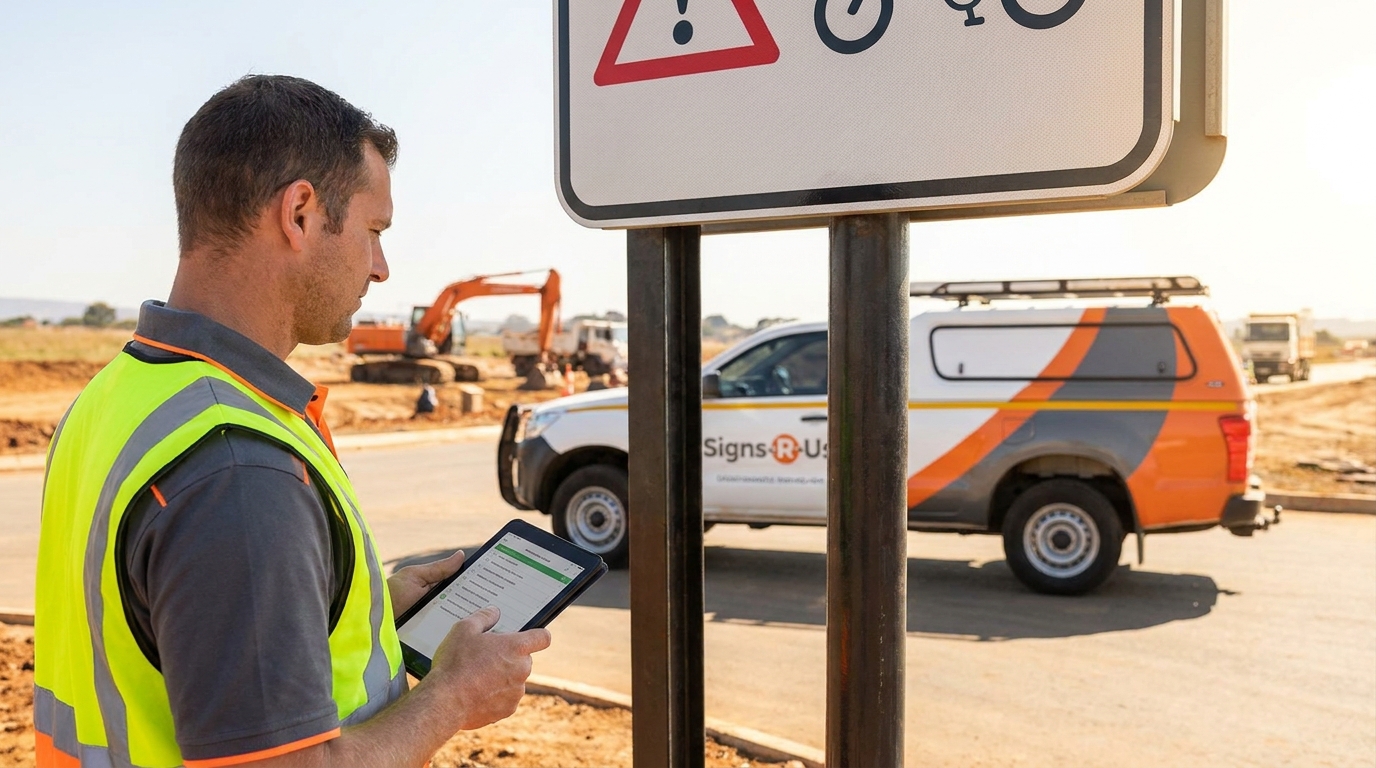
A maintenance programme does not need to be complicated, but it does need to be systematic. The components that make it work are: a complete sign register, a scheduled inspection routine, a defined condition standard, a documented repair and replacement workflow, and a reliable supply relationship.
The Sign Register
A sign register is simply a record of every sign on your site. It should capture the sign type, its location, the date of installation, the substrate and material specification, and the result of each inspection. This is the document that demonstrates due diligence to an inspector and allows you to identify patterns – a batch of signs from the same production run that are all showing early UV degradation, for example, or a particular area of the site where signs are being damaged repeatedly by vehicle movement.
Scheduled Inspections
The inspection frequency should match the risk level and the environment. A minimum baseline is a formal inspection every six months, with informal visual checks incorporated into regular site walkabouts. High-risk areas – plant entrances, pedestrian crossing points, chemical storage areas, underground access routes – should be checked more frequently.
Inspectors should check for legibility (text and symbols clearly readable at the specified viewing distance), colour integrity (no significant fading or colour shift), physical condition (no cracks, warping, or delamination), mounting condition (posts, brackets, and fixings secure and free of structural deterioration), and correct positioning (not obscured by vegetation, vehicles, or new structures).
Repair Versus Replace
Minor physical damage to a sign mounting can sometimes be repaired without replacing the sign face itself. A bent post can be straightened or replaced; a loose bracket can be re-fixed. The sign face, however, should generally be replaced rather than patched. A sign with a repair patch is visually inconsistent and may fail the legibility test at the required viewing distance. For OHS and road signs in particular, partial repairs rarely meet the specification standard.
Signage Maintenance South Africa: How Signs-R-Us Can Help
Managing signage across a large site or a portfolio of facilities is not practical without a reliable supply and service partner. Signs-R-Us works with facilities managers and site managers across South Africa on ongoing maintenance contracts that cover scheduled inspections, condition reporting, replacement supply, and installation.
The advantage of a maintenance contract over ad hoc replacements is consistency. Signs are replaced to the same specification each time, records are maintained centrally, and there is a clear escalation path when urgent replacements are needed. For mining operations, construction contractors, and large commercial facilities, this removes the administrative burden of managing signage as a series of one-off procurement events.
Signs-R-Us manufactures across a wide range of substrates and sign types, from OHS signage and PPE to road signs and mining wayfinding signage. Having manufacture, supply, and installation under one relationship simplifies the process considerably and reduces the risk of specification mismatches between different suppliers.
A Few Practical Reminders Before Your Next Site Walk
- Any sign forming part of your OHS compliance framework should be treated as critical infrastructure – inspect it, record it, and replace it promptly when it fails.
- Substrate choice at installation determines how long a sign will last. Invest in the right material for the environment, not the cheapest option for the budget cycle.
- Keep your sign register current. It is the document that protects you in an audit or an incident investigation.
- Do not wait for a sign to become completely illegible before replacing it. Degradation is gradual, and a sign that has lost thirty percent of its contrast is already underperforming.
- Factor environment into your replacement intervals. A coastal site, an underground mining environment, and a Gauteng industrial park all age signs at different rates.
Signage maintenance in South Africa is not a luxury item on the facilities budget – it is part of the legal and operational framework that keeps sites safe, keeps staff and visitors informed, and keeps your organisation on the right side of the OHS Act. The cost of a proactive maintenance programme is almost always lower than the cost of an incident, a compliance notice, or an emergency replacement at short notice.
If you are ready to put a structured maintenance plan in place, explore the Signs-R-Us signage maintenance service or request a custom quote for your site. The team can assess your current sign inventory, identify compliance gaps, and propose a maintenance schedule that fits your operation.