
When a project manager or procurement officer begins sourcing road signs, one of the first decisions is whether to buy from a manufacturer of road signs or from a reseller who stocks signs off a shelf. On the surface, both options can look identical: same products, similar pricing, similar lead times. But the differences become very apparent the moment a project requires a non-standard size, a specific retroreflective grade, or a supplier letter confirming SARTSMA compliance for a tender submission. Understanding what manufacturing actually means in the road signage context is not a technical exercise – it is a procurement decision that directly affects your project’s risk profile.
What a Manufacturer of Road Signs Actually Produces
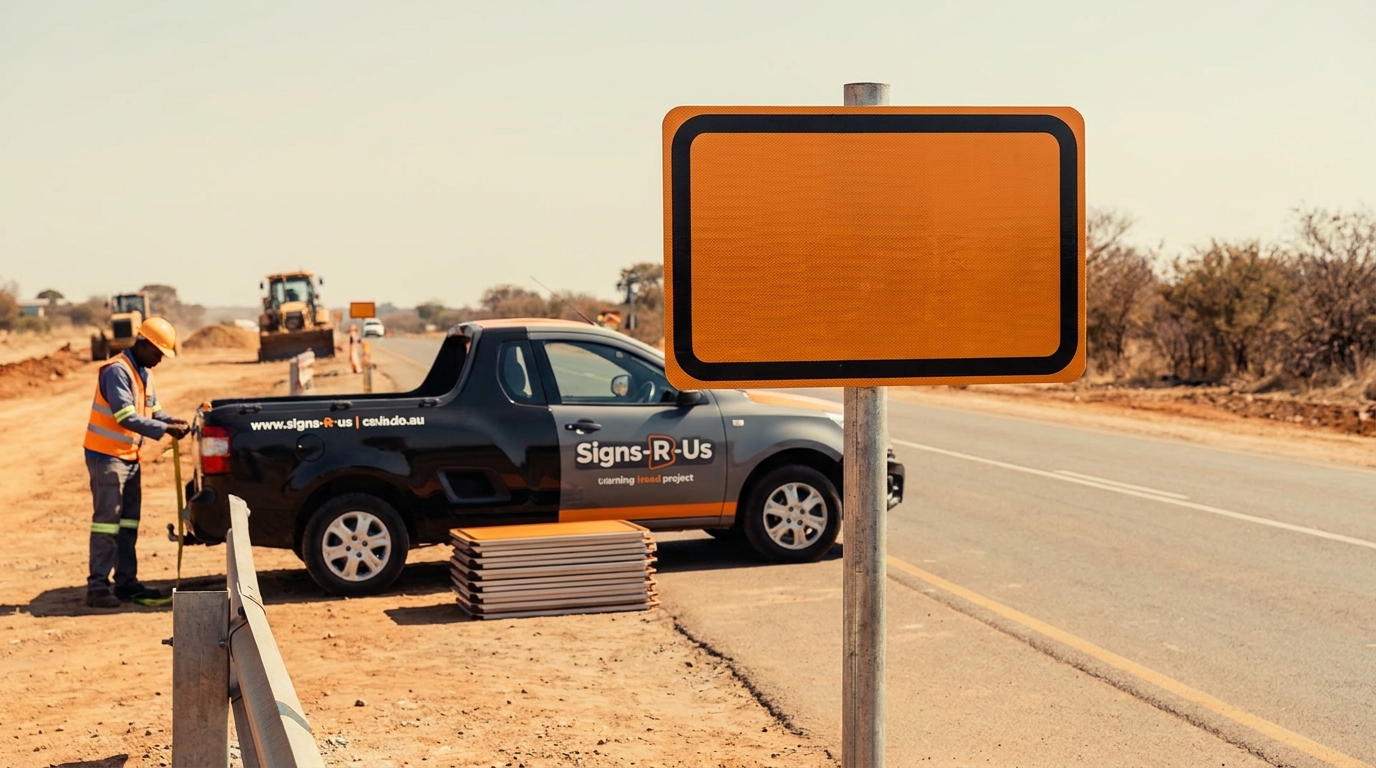
A road sign manufacturer begins with raw materials. Sheet metal, typically aluminium or galvanised steel, arrives in standard plate sizes and is cut, profiled, and shaped in-house using guillotines, press brakes, and CNC routing equipment. The fabricated blanks are then cleaned, primed, and prepared to receive retroreflective sheeting. That sheeting is applied under controlled conditions, because bubbles, misalignment, or contamination during application will compromise both the sign’s appearance and its photometric performance.
Retroreflective sheeting is classified into grades, with the South African road signage environment governed by SARTSMA (the Southern African Road Traffic Signs Manual) and, where road construction is involved, by COLTO (the Committee of Land Transport Officials) specifications. These frameworks specify which retroreflectivity class is required for a given sign type and position. A manufacturer working to these specifications does not simply source any sheeting that looks bright enough. They procure certified materials, apply them correctly, and can provide documentation to confirm compliance. That documentation is what a project engineer or a SANRAL contract manager will ask for.
Printing and marking are done using UV-stable inks and processes appropriate for outdoor exposure in South African conditions, where UV intensity and temperature cycling are considerably more demanding than in many other climates. The finished sign is then fitted with the correct backing, mounting holes, or frame system specified for the installation environment.
The Difference Between a Manufacturer and a Reseller
A reseller buys finished signs from a manufacturer, marks them up, and sells them on. There is nothing inherently wrong with that model for straightforward requirements. If you need fifty standard 600 x 600 mm warning signs in a standard retroreflective grade, a reseller with stock can often turn that around quickly.
The limitations appear when a project deviates from the standard. A reseller stocks what the manufacturer decided to produce. They cannot fabricate a 900 x 1 200 mm non-standard directional sign for a mine portal, they cannot produce a custom combination sign layout, and they cannot provide you with manufacturing certificates because they do not manufacture anything. If your project requires documentation of the production process, material certifications, or proof that SARTSMA-compliant sheeting was applied, a reseller simply cannot supply those documents from their own records.
For infrastructure projects, municipal contracts, and mining operations, this distinction is rarely theoretical. Tender specifications frequently require the supplier to demonstrate manufacturing capability or to hold relevant industry registrations. A reseller who cannot meet those requirements may still win the order informally, but they can create serious compliance gaps during project audit or handover.
Custom Sizes and Non-Standard Layouts
Many project environments require signs that do not exist in a standard catalogue. A mine access road may require larger lettering at a speed that SARTSMA tables do not directly address. A construction detour layout may need a custom assembly of directional arrows and distance plates that must be fabricated as a single unit rather than bolted together from mismatched stock items. A municipal street furniture project may require a specific post dimension or a branded backing colour that no standard product accommodates.
These requirements can only be fulfilled by a manufacturer with the equipment and qualified personnel to cut, form, and finish signs to a brief. The ability to interpret a project drawing, produce a custom profile, and apply the correct sheeting to an unusual substrate is what separates a manufacturing operation from a warehouse.
Combination Signs and Mounting Systems
Combination signs present a particular fabrication challenge. A single assembly may carry regulatory information, a warning, and a distance plate, all with different background colours and retroreflective requirements. Producing these correctly means understanding how the individual sign faces relate to each other visually and structurally, and how the combined assembly will be mounted on a post or gantry. Getting this wrong is not just an aesthetic problem. An incorrectly assembled combination sign may fail a road authority inspection, requiring removal and replacement at the contractor’s cost.
Compliance Documentation and Why It Protects You
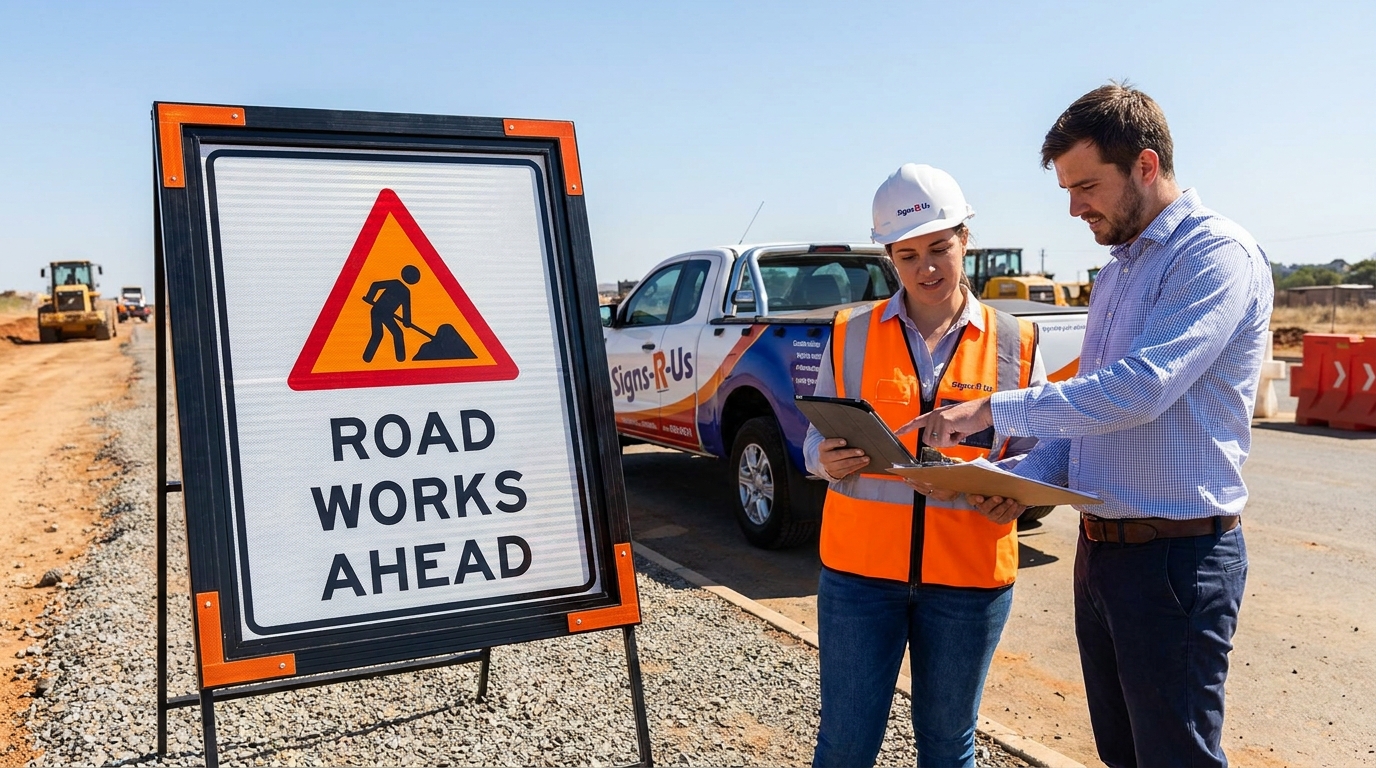
Project managers working on SANRAL, provincial roads, or large municipal contracts will be familiar with the documentation requirements that accompany material deliveries. Signs are not exempt from this. A road authority or consulting engineer may require a material data sheet for the retroreflective sheeting, a certificate of conformity confirming SARTSMA compliance, or evidence that the supplier’s production process meets the relevant standard.
A legitimate manufacturer holds these documents because they are part of their own quality assurance process. They can issue certificates of compliance, provide sheeting manufacturer data sheets, and confirm the retroreflective class of each sign supplied. If a dispute arises after installation – a sign is found to be underperforming at night, or a road authority queries whether the correct grade was used – traceability back through the manufacturing records is what resolves the matter cleanly. Without it, the liability sits with the contractor who installed the signs.
For further background on what these standards require in practice, the article on SARTSMA vs COLTO compliance and what it means for your project covers the framework in useful detail.
CIDB Registration and BBBEE Credentials in Tender Evaluation
For anyone procuring road signs under a formal tender process, the supplier’s credentials extend beyond the product itself. Two areas matter most: CIDB registration and BBBEE status.
The Construction Industry Development Board (CIDB) grades contractors and suppliers according to their financial capacity and track record. Many public sector road and infrastructure contracts require suppliers to hold a relevant CIDB grading. If your project is procured under a contract that specifies a minimum CIDB grade for sub-suppliers, sourcing signs from a supplier who does not hold that registration can create a compliance problem that affects the main contractor’s standing on the project. Verifying this at the sourcing stage costs nothing. Discovering it during a compliance audit costs considerably more.
BBBEE credentials carry similar weight. South Africa’s procurement environment applies preference points to suppliers with valid BBBEE certificates, and many tenders include a minimum BBBEE level as a qualifying criterion. A supplier’s BBBEE level affects the preference points available to the buyer, which in turn affects the overall tender score. For competitive tenders, this is not a marginal consideration. Choosing a supplier with a stronger BBBEE rating, where products and pricing are otherwise comparable, is a straightforward way to improve a tender’s preference point allocation.
Requesting a supplier’s CIDB registration certificate and a current BBBEE verification certificate before issuing a purchase order is basic due diligence. A reputable manufacturer of road signs will have both readily available.
What to Ask a Supplier Before You Commit
Whether you are evaluating a manufacturer or a reseller, the questions below will clarify what you are actually buying and whether it will hold up to scrutiny on site or in a tender audit.
- Do you manufacture in-house? Ask specifically whether cutting, fabrication, and sheeting application all happen on your premises, or whether you source finished signs from a third party.
- Can you supply SARTSMA-compliant documentation for each sign type? This should include the retroreflective grade and the sheeting manufacturer’s certificate.
- Can you produce non-standard sizes or custom layouts? If yes, ask what the minimum order quantity is and what the lead time looks like.
- What is your CIDB registration number and grade? Verify this on the CIDB register before including the supplier on your approved list.
- What is your current BBBEE level, and can you provide a valid verification certificate? Check the expiry date. An expired certificate does not qualify for preference points.
- What is your standard lead time, and how do you handle urgent requirements? A manufacturer with in-house capacity can often expedite custom work in a way that a reseller waiting on a third-party supplier cannot.
The answers to these questions will tell you very quickly whether the supplier can actually support your project or whether they will be a source of delays and documentation gaps further down the line. For a broader view of the selection criteria that matter most, the article on what to look for in a manufacturer of road signs in South Africa expands on several of these points.
Signs-R-Us: Manufacturing Capability Built for South African Projects
Signs-R-Us operates as a direct manufacturer of road signs, with in-house fabrication, sheeting application, and finishing capability. Signs are produced to SARTSMA and COLTO specifications, with certified retroreflective materials and full documentation available for project compliance purposes. The range covers standard road signs as well as custom sizes, non-standard profiles, and project-specific combination sign layouts for road construction, mining, and municipal applications.
CIDB registration and a valid BBBEE certificate are both maintained and available on request, making Signs-R-Us a qualifying supplier for tendered infrastructure projects. The road signs service page provides detail on the product range, and the certificates page lists current registrations and accreditations.
If your project requires road signs that need to meet a specification, carry documentation, or fit a non-standard brief, the right starting point is a direct conversation about what you need. Request a custom quote from Signs-R-Us and get a response from a team that manufactures the product, not one that orders it in from somewhere else.